


Afro Fusion: In the Words of Its Contributors
- Zhakiya Sowah
- 7 minutes ago
- 11 min read

There’s been ample discussion online about the rise and decline of Afroswing that has settled into a really blunt, reductive verdict. The genre is usually described as ‘xylophone music’ and recounted as a repetitive sound that peaked quickly and faded before its artists were able to build sustained careers. The lack of longevity and consistent mainstream success is deemed as a failure that erodes the true legacy of Afroswing.

I fear it’s difficult to counter that viewpoint when as recently as the other day, the reappearance of Not3s in conversation was by way of the release of an AI-generated track he neither made or posted. This occurring just weeks after Edrants and OGD of NSG reopened the conversation around Afroswing’s impact in comparison to Afrofusion is extremely jarring. That’s the internet for you, we see in real time how quickly musical identities can be extracted from their context and turned into a cheap novelty AI prompted moment.
I have a deep respect for Afroswing and I have an even deeper resentment to the current narrative around it. 2013-2017 was a beautiful experimental time in the genre that laid the foundations and technique for what we see today in our beloved Afrofusion. My claim is that there is a direct lineage from this time to the music we have now. I refuse to let late stage Afroswing be the dominant narrative that messes up the family tree because I was there.
2017 JHus and JAE 5 gave us Did You See which saw great commercial success. This was the song that set the pattern for the brand of music we term ‘xylophone music’. Should we be disgruntled at the similarities between Did You See and 6:30 by Geko & NSG (2019) if:
The song is actually good (to me at least) ?
It’s produced by the same person ?
As for every other imitation, I agree they were annoying but I don’t think the genre itself or its contributors should pay for their sound being diluted and copied by YouTubers looking for a quick come up in music or artists trying their luck at getting some visibility again. I like to remember Afroswing as an innovation. One that should be respected as well as its evolution.
Afrofusion makes me excited in the way that early Afroswing did. Where Afroswing was consolidated around a recognisable rhythmic identity, Afrofusion heavily resists that. It draws from the experimental years that preceded Afroswing’s mainstream peak and when the sound was still unstable, more exploratory, and less bound to formula. In that sense, Afrofusion is closer to Afroswing’s unfinished phase than its commercial endpoint. The distinction matters because it reshapes how continuity is understood. The genre doesn’t reject the legacy it’s building on.
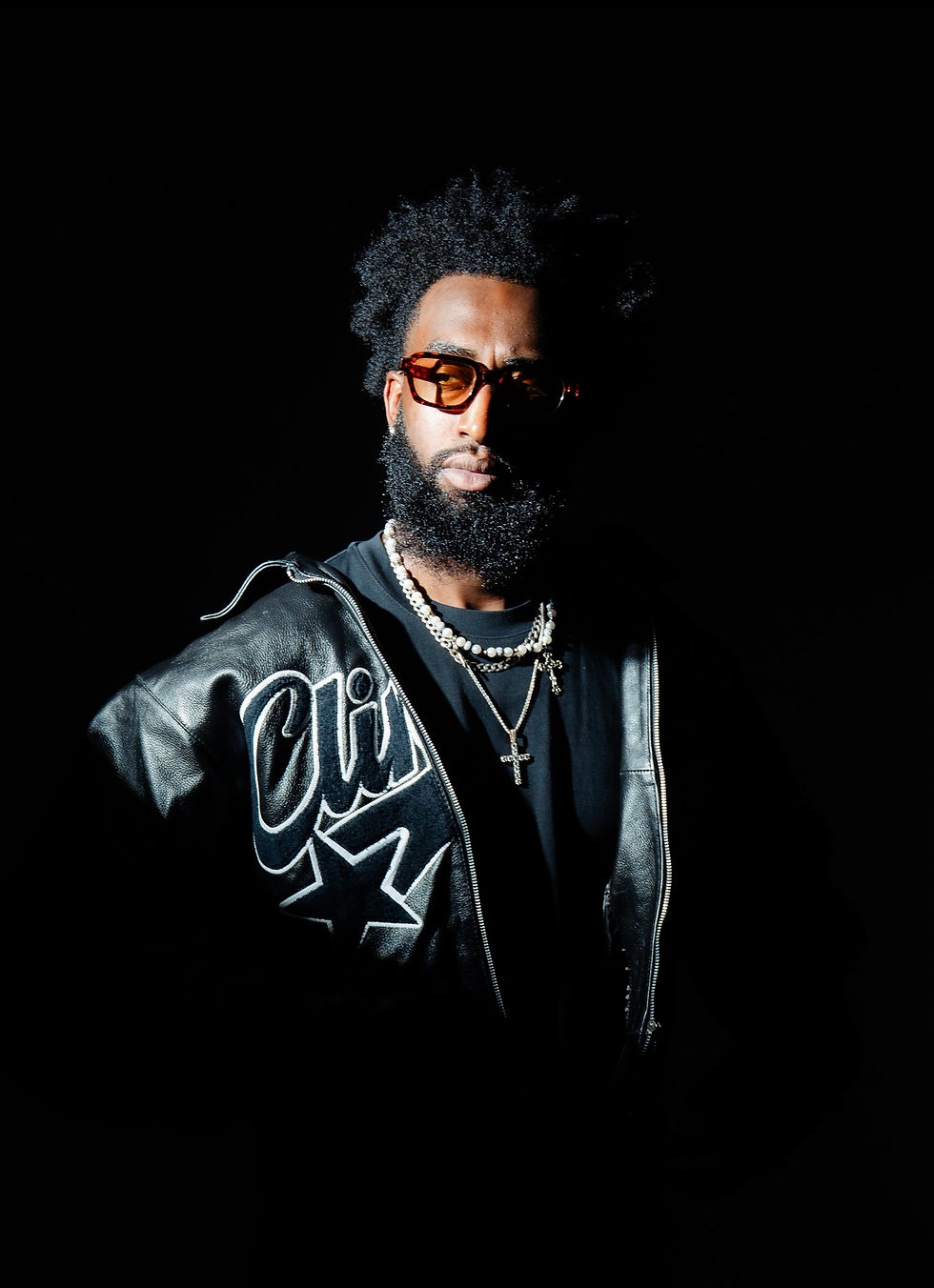
AFROFUSION IN THE WORDS OF ITS CONTRIBUTORS
Afrofusion is a developing Black British sound shaped by artists and producers who grew up inside and move seamlessly between multiple musical worlds at once. It emerges from the same lineage as Afroswing but operates with a different set of instincts being broader reference points, stronger songwriting foundations, and a production approach that isn’t bounded by genre traditional genre lines. Afrofusion is so expansive that I’d argue its collectivity is in shared musical, cultural, and digital fluency.
Last year I had multiple conversations with some of the key contributors to the sound. I'll be exploring the genre by referencing these conversations because who else could articulate this space better than them? You’ll hear from producers Sparbz, Saionthebeat, Madeinparris and Jeffery Hypzo; artists Moses CBG, Gwamz and Efosa; and PB, who is Marzi’s manager. They each occupy different technical, creative, strategic positions but together they articulate a pattern. This roster of people depict how expansive the genre is and how it already has subsounds that can be further categorised. Most importantly, none of them describe a rigid genre. What they collectively describe, is a way of making music.

THE CLIMATE
In the last 7 years the conditions that shape artists have shifted. In a post-pandemic world our access to global sounds is immediate. Audiences are fragmented but wide-reaching. The idea of committing to one genre almost feels stupid when listeners themselves move so freely between scenes. Where Afroswing developed through a dialogue between the UK and West Africa, Afrofusion expands that dialogue outward across diasporas, platforms and subcultures all while remaining rooted in Black British experience. This is the initial progression.
The streaming era has widened both influence and ambition as artists are no longer building solely within local scenes and are responding to a global audience from the outset. The visibility platforms like Tik Tok offer in tandem with the rise of Afrobeats and Amapiano internationally have shown us what’s possible for the Black British artist making Afro influenced music.
It’s really interesting that this shift has come at a time where Black Britishness as we know it today is relatively new but more openly claimed. I feel like the pandemic accelerated this with music becoming more digitally mediated, and conversations about identity became more pronounced online. I don’t want to reduce it to the diaspora wars on Twitter and Clubhouse but we definitely had poignant conversations that seemed to cause a reconsideration around the shared identity we have regionally and project globally. What once was an implicit identity began to be asserted more directly and this assertion feeds into the sound which is confident in hybridity.
Afrofusion grows out of all of these moments and comes with new influences, new expectations, and a different relationship to audience and identity.

A PRODUCER LED SYSTEM
Afrofusion reflects a producer-led moment, where the people building the music are also shaping the boundaries of the genre itself. What I love about this sound is that its identity doesn’t sit in tempo or influence alone, there’s emphasis on construction which varies producer to producer. So how tracks are assembled, how elements relate, and how far those relationships stretch without breaking cohesion.
Across conversations, one principle holds: songs are built from melody outward.
Sparbz describes his process in direct terms: “I start with melodies… the melodies inspire my drums and my drums are actually melodies in itself.”
Saionthebeat arrives at the same structure from instinct: “I need something melodic to then determine how the drums are going to go.” I found that this alignment matters because it signals to me the lineage between Afroswing and Afrofusion as melodic UK sounds. Here, melody determines timing, spacing, and emotional tone and the rhythm adjusts to it.
That adjustment changes what drums are doing. They are no longer just fixed loops carrying the track from start to finish. They’re responsive elements that sometimes pull back when the vocal needs space, or they’re simplified to create space, then they return with emphasis to underline transitions. Sparbz’s description of “spreading it out” and “chopping it up” points to this elasticity. The bounce remains, but it’s no longer dependent on repetition.
A track like Gwamz’s “Like This,” produced by Sparbz and Saionthebeat, makes that logic audible. The topline leads, and the drums organise themselves around it, shifting in density and placement rather than locking into a rigid pattern. I personally believe this is the Afrobounce sound which is the name I’ve used to refer to this niche since late 2024/early 2025.
There’s a flexibility that allows the genre to expand without losing coherence. Afrobeats and dancehall are still present, but less as structural frameworks and more as textural references. So you hear it in rhythmic accents, percussive choices, and tonal cues. You notice them instinctively, but the song is not bound to any rules. That distinction is what makes it possible for tracks with very different surface qualities to sit within the same space.
The clearest way I could articulate the space for you to understand is that the producers contain a multitude of genres and represent Afrofusion. They act as spectrums and the way to pin down specific genres is by plotting points with the artists they work with.
Saionthebeat sits at one edge of that range, where Afrofusion overlaps with the UK underground and alternative electronic scenes. His work with Len, particularly on tracks like “RELIEVER,” carries a futuristic, almost spatial quality that’s synth-led, ambient, and rhythmically fluid, yet still anchored by Afro-influenced movement. That same sensibility appears in more stripped-back, melodic contexts on songs like “picture 4 me” with Cxrno, where the production leans into atmospheric R&B without losing its underlying bounce. Even within more conventional song structures, as in Dexter in the Newsagent’s “Special,” his contribution introduces a distinct shift: Afrobeats and dancehall elements sit lightly in the mix, integrated into a broader, more synthetic palette rather than driving it. So if Saionthebeat was a spectrum, Len’s plot point is UK Underground, Cxrno sits at UK Rnb, and Dexter’s is indie pop.
In my head the producer spectrums are stacked on top of each other to build the Afrofusion sound. That being said Sparbz occupies a spectrum defined by energy and immediacy. His work with Gwamz and Zeddy East also foregrounds Afrobounce. With Gwamz, that energy leans Afro-influenced; with Zeddy East, it draws more heavily from dancehall. The underlying method remains consistent, but the outcome shifts depending on the artist. In more experimental collaborations, including work with Marzi and JELEEL, that same approach stretches further, so it becomes less about direct physicality and more about unpredictability.

Jeffery Hypzo’s presence complicates the geography of the sound. As a Belgian-Congolese producer working across scenes, his contribution points to Afrofusion’s wider reach beyond the UK while remaining in dialogue with it. His production carries a distinct duality in that it’s both futuristic and nostalgic, dense yet controlled. “The melodies are futuristic, the drums are simple … but when you blend them, it becomes something new,” he explains. Elsewhere, he reduces the process further: “The rhythm is the most essential part… melodies create the emotion, but the drums are the push.” His emphasis is on balance rather than formula. His work, particularly with artists like Len, shows how easily the sound moves between underground experimentation and broader, globally legible forms.

MadeinParris resists fixed positioning altogether. “I don’t see my production aligned with a specific genre,” which is a stance that reflects a wider reality within Afrofusion. His work with artists like MBrown and Chy Cartier moves across moods and structures from RnB to Drill without settling into a single identifiable lane, reinforcing the idea that the genre’s coherence comes from approach rather than uniformity. The through-line is a shared way of handling sound.
If producers define the range, artists locate themselves within it. That’s why a WIZXRD and Skarz collaboration exists in the same universe as a Saionthebeat and Len song which exists in the same universe as a MosesCGB song.
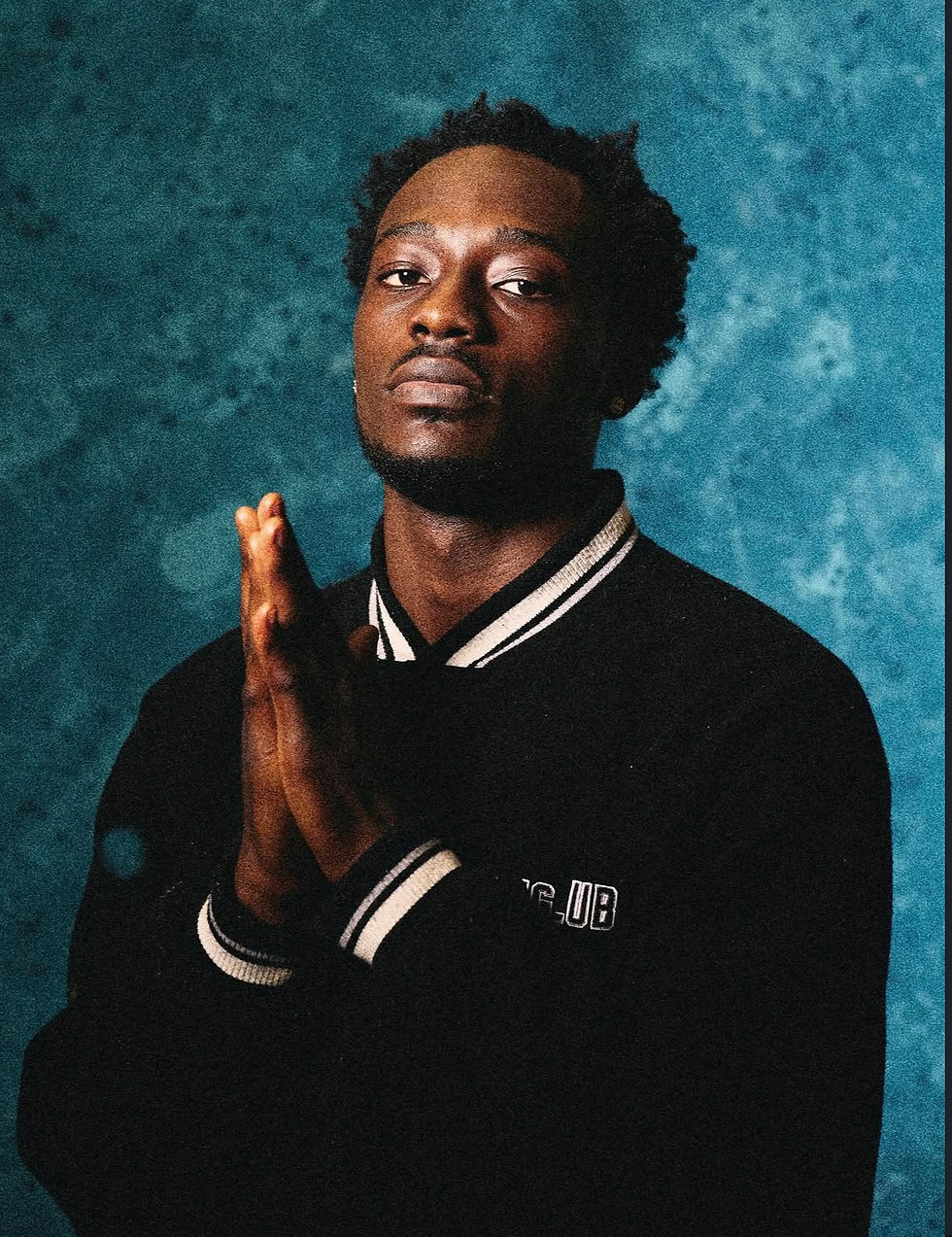
MosesCBG operates in a more R&B-adjacent space as he prioritises melody, phrasing, and lyrical structure. His influences span from PartyNextDoor, Travis Scott, Brandy, and UK figures like Ragz Originale which speaks to a fluid listening habit that shows up in the music. His songs JADED and Once in a Blue Moon are exemplary of a writing approach shaped by multiple traditions.
Efosa occupies a similar area, though with a more explicitly Afro-influenced lens. He draws from artists like Tekno and Timaya while maintaining R&B’s emphasis on stacking vocals, harmony and emotional clarity. They both bring my attention to a noticeable shift in songwriting between Afroswing and Afrofusion. Lyrics matter in Afrofusion. When there’s more lyricism, there’s a clearer exploration of themes. They occupy a space where romance, vulnerability, and introspection are valued on account of their RnB roots.

FLUENCY: THE CORE SHIFT
This expansion in tone is matched by a shift in finish. Afrofusion often carries a cleaner, more polished sound than its predecessors and that’s shaped in part by the expectations of a global audience and the conditions of the streaming era. These artists are making songs knowing that they have to travel across platforms, scenes, and across listener bases that are already accustomed to genre fluidity. I feel this results in music that feels much more aspirational. What holds all of this together is that producers move freely across a range of sounds, and artists find their place within it. In that sense Afrofusion is a system. A system of spectrums I guess.
Marzi’s MGMT PB articulates this directly: “The new guys can make very high level music in all those genres.” His point is about the competence of the artists. These artists are not borrowing elements but are fluent in them.
MosesCBG echoed this in practice: “I like afrobeats, but I’m not an afrobeat artist… I like trap, but I’m not fully trap.” His identity sits between categories because of his familiarity with each space. This fluency shapes production and songwriting choices.
GENRE POLITICS: NAMING AND ITS LIMITS
The question of naming remains unresolved. “Afrofusion” is the current label, but I doubt it’s fixed. Terms like “Afro bounce” are already being used to describe to different factions of the sound: one being aligned with Afrofuturism in the underground and the other being attributed to a more mainstream sound. Afro swing itself was once labelled Afrobashment.
I believe there is value in naming. It provides clarity, helps artists position themselves, and allows audiences to recognise patterns. PB notes the importance of this from a managerial perspective in reference to Marzi as genres can solve identity problems within the industry.
At the same time, premature categorisation carries risks. A name can harden into expectation. If the sound becomes associated with a narrow formula, it risks repeating the trajectory that limited Afroswing’s later development. As I said earlier Afroswing also had its experimental phase until it broke commercially and a formula was established. For now, the label functions more as a placeholder that generally describes what it is sonically happening. It is a fusion of genres with African influences. Even then it doesn’t capture the dancehall influence and Burna Boy has also used the title to categorise his music which is more rooted in Afrobeats.
Contributors as Architects
If I was to summarise each contributor’s viewpoint from our conversations it would be like this, just to give you an idea of what Afrofusion looks like for now:
Sparbz: defines its melodic-first production logic and rhythmic flexibility
Jeffery Hypzo: emphasises emotional resonance and the balance between melody and rhythm
Moses CBG: represents the artist navigating multiple influences without fixed identity
Gwamz: brings cultural texture, performance energy, and perspective
Madeinparris: pushes sonic experimentation, blending traditional and futuristic elements
Saionthebeat: highlights collaborative creation and adaptive production
Efosa: underscores independence, songwriting depth, and structural awareness
PB: provides the strategic and conceptual framing, particularly around versatility and infrastructure
As you can see no one person can define the genre alone. It’s inherently collective.
CONCLUSION
When I consider what would give this genre longevity, infrastructure is another challenge. While there is strong online support, the lack of consistent live circuits, collaborative platforms, and unified spaces could limit growth. PB also pointed to these gaps as areas that need development and pointed to the underground, its collectives, its shows, its self-sustaining ecosystems as a working model.
Afrofusion doesn’t organise in the same way, and part of that is structural rather than accidental. It doesn’t exist as a clearly bounded subculture. The UK underground can move densely and collectively because it’s tied to a distinct visual language, physical spaces, and a shared sense of separation from the mainstream in fashion, aesthetics, and community all reinforcing each other in real time. Contrastingly, Afrofusion sits in closer proximity to dominant Black British music culture. Its artists aren’t operating outside of that and their audiences go to Sika and OVMBR.
That proximity brings advantages such as access, visibility, the ability to integrate but it also diffuses the need for self-contained infrastructure. There’s less urgency to build independent circuits when existing ones are accessible. The result is a scene that feels connected but not always consolidated.
If the genre is to sustain itself over time, that balance may need to shift. Not necessarily towards isolation, but towards intentionality in creating more shared spaces, more collaborative moments, more physical sites where the sound can exist beyond the digital. Because while audiences can be built online, culture tends to solidify in rooms, in repetition, in presence.
Afro fusion is still forming. Its boundaries are unclear, its name is unsettled, and its future depends on forces beyond the artists themselves but its direction is visible. The archive begins here, before the sound stabilises, while its edges are still moving.


Comments