


Move Different: How Black Organisers Are Reclaiming the Body in the Underground
- Zhakiya Sowah
- 11 hours ago
- 11 min read

To move to music is to enter into dialogue with it, to respond, interpret, and contribute. The dancer is not a passive recipient of the DJ's vision. They come together as co-authors and design the energy of the room. That is why the dancefloor has historically been a democratic space in Black music scenes. Movement speaks to lineage, whether you're a second-generation queer African or a third-generation Caribbean. The dancefloor is the one space where the complexities of identity do not need to be explained or defended. They are simply expressed through rhythm and physicality.
Understand this is precisely what is at stake when dance is evacuated from Black music spaces. For a long time, finding that feeling in UK underground music spaces has required a deliberate, almost archaeological search. Somewhere between the rave scene's ascent into respectability, the gentrification of clubbing, and the slow absorption of Black music genres into white-dominated underground circuits, something essential got left behind. The body. The communal, uninhibited, culturally participatory act of dancing.
Thankfully, there is a growing cohort of Black British organisers who are making sure it doesn't stick.

The reclamation of Black dance music spaces in the UK is happening at a specific and charged moment. Afrobeats and amapiano have never been more commercially visible, yet that visibility has come at a cost with the flattening of genres , the dilution of cultural specificity, and the absorption of Black music into mainstream without cultural authenticity. Simultaneously, a generation raised on algorithmically curated playlists and social media documentation is beginning to interrogate what is lost when music becomes content and the dancefloor becomes a backdrop. These two tensions are colliding in the UK underground right now, and Black organisers are at the centre of that collision.
This article sits inside that conversation, arguing that the dancefloor is not a peripheral concern but the primary site where Black musical identity is formed, transmitted and protected and that the events and collectives emerging now are not simply throwing parties, but actively reconstructing an infrastructure of cultural memory that commodification, gentrification and the attention economy have all worked, in different ways, to dismantle.
Ask anyone who came up in nightlife before the smartphones became ambient and you’ll notice a pause. It’s not a lapse in memory, it’s honestly a problem of translation. What they’re reaching for exceeds language because it was never organised around it. To go out once meant to step out of circulation. You told someone where you were going, and then you disappeared into a bounded world for a set number of hours. No live updates, no parallel online audience. The room was the total environment. The device in your pocket, if there was one, was incidental and often a Nokia mobile phone that functioned more as contingency.
Black dance music has historically engineered spaces that prioritise sensory and collective synchronisation. Scholars like Paul Gilroy have framed these sites as part of a wider Black Atlantic tradition, where music and movement operate as forms of social knowledge. In this context, the dancefloor is epistemological.
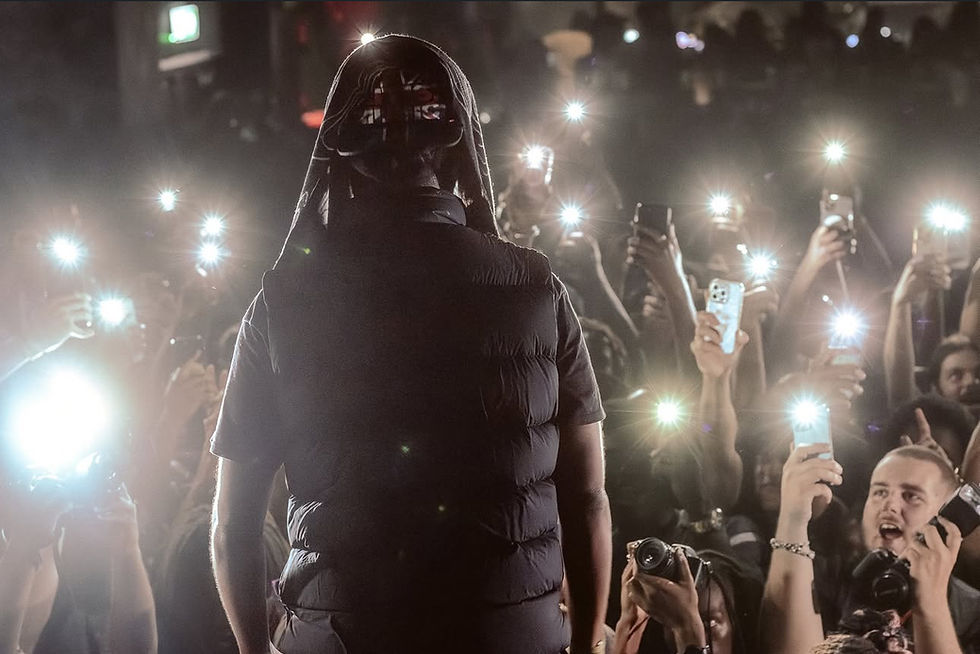
That framework makes the current moment we find ourselves in easier to diagnose. Events like Barfest and their explicit no-phone policies, are often read as nostalgic gestures. However, nostalgia is the least interesting thing about them. What they are actually doing is attempting to restore a set of conditions where a particular kind of collective experience becomes possible. Their argument is not that phones have changed how nights are remembered, but that they have altered the experience of the night itself. It affects how attention is distributed, how bodies respond to sound, how affect circulates within a crowd.
To understand this shift, it helps to be precise about timelines. The release of the iPhone in 2007 marks a structural turning point culturally. By 2010, with the launch of Instagram, the architecture for real-time self-documentation was in place. What follows through the 2010s is a gradual reorganisation of nightlife rituals. In 2009 you would have waited to get home to upload party pictures to Facebook off your camera, by 2014 you could upload videos live and direct from the party onto Snapchat.
We’ve transitioned into an era where the night out becomes dual-layered: one level lived in the room, another curated for an external audience. These layers increasingly collapse into one another and shape the experience.
You only record and upload the video where the crowd was finally jumping for that one song in particular. The DJ is now used to the whole function facing them and being surrounded by a sea of phone cameras. Everything is curated around the digital, even down to how you allow yourself to experience the party.
From a media theory perspective, this is a shift in regimes of attention. Jonathan Crary writes on 24/7 capitalism, and describes a world where attention is continuously captured and redirected by networked devices. The dancefloor used to operate as a counter-site to this logic. The introduction of the smartphone fractured that. Even when not actively in use, the device carries the potential for interruption in being a latent elsewhere that competes with the here.
This competition is not neutral, and it does not distribute its effects evenly. In Black music spaces, the dancefloor has long functioned as a site of assembly under conditions where assembly itself has been policed. In the UK, for instance, the legacy of the Criminal Justice and Public Order Act 1994 along with its explicit targeting of gatherings defined by “repetitive beats” , reflect decades of surveillance directed at Black nightlife. Earlier still, the policing of sound system culture in the 1980s established a pattern in which sonic and physical congregation was
treated as suspect.
It seems that surveillance has changed hands and what was once enforced from the outside by racist institutions has found its way into the room. We have adopted a self-monitoring system that stifles expression and begs the question in a room of ubiquitous documentation: how far are you willing to go in enjoying yourself, knowing the moment may be endlessly replayed outside of the room?
Considering this, it’s clear we have lost what was once. Historically, the dance floor was a space of what Fred Moten might call “fugitive” sociality which are forms of being together that evade easy capture or regulation. Crucially, these forms rely on a density of presence. Something happens when enough bodies are fully attuned to the same rhythm, when response becomes collective rather than individualised. DJs often describe this as the moment a room locks in and creates a feedback loop between selector and crowd that produces an intensity difficult to replicate elsewhere.

Screens interrupt that loop in a less dramatic, but more persistent way. We know the patterns: a track builds, the room edges toward a peak, and a proportion of the crowd reaches toward their pockets instead of each other. The moment is split between those inside it and those already converting it into content and we lose the synchrony.
None of this suggests a total collapse because of course cultures adapt and scenes mutate. However, it does point to a thinning of the conditions that once made certain kinds of collective intensity more readily available. What organisers now seem to understand, whether through explicit no-phone policies or through programming that overwhelms the impulse to document, is that presence can no longer be assumed. It has to be produced.
In that sense, the current wave of interventions is less about returning to a lost past than about negotiating the terms of the present. The question is not whether technology can be removed but if spaces can be structured in ways that temporarily suspend its dominant logic. If for just a few hours, the body can once again take precedence over the screen and the room over the feed.
NYTESHFT and the Architecture of Intention

PrettyTwisted* has long been a fixture of the UK underground, grounded in a sustained commitment to platforming Black artists and creatives while actively contributing to the scene’s infrastructure.
Their forthcoming event, NYTESHFT extends that work. Built around a strict no-cameras policy, it centres the celebration of Black dance music in its full breadth and genealogy whilst creating the conditions for presence and immersion. It signals a shift, a recalibration, a deliberate claim of space within nightlife.
NYTESHFT constructs an environment where the cultural weight of Black dance music is foundational. What happens in the room is designed to be over rather than captured or circulated. You are held between sound, movement and the people present enough to meet it fully.
Body2Bass: Afro-Electronics and Diasporic Frequency

Lisa Keeks is a DJ and Body2Bass, her Afro electronic rave night, names its philosophy in its title. The bass is not an abstract sonic entity. It speaks directly to the body. It always has.
Body2Bass insists on specificity and plurality in Black music. Gqom sits alongside Soca's Caribbean pulse alongside South African house alongside the pan-African rhythmic grammar of tribal. This is not eclecticism for its own sake but it is a deliberate mapping of the African diaspora's musical nervous system, and is a space where the body is invited to locate itself within a rich lineage.
sxyblkppl: Expanding Blackness

Apex Anomaly's sxyblkppl might be the project in this scene that most aggressively refuses containment. A techno, ballroom, juke, jersey club and amapiano, Afro house rave, it draws from traditions that are all rooted in Black and queer communities using music and movement as modes of survival, self-invention and communal belonging.
Ballroom culture has long understood centuries before wellness culture that the body in motion is a site of healing and self-determination. Juke and footwork, from Chicago's South Side, transformed speed and rhythm into a form of virtuosity that existed largely outside mainstream recognition. Afro house carries within it the memory of the sound system and the community gathering. sxyblkppl brings these lineages into the same room and asks: what happens when Black people who have been doubly and triply marginalised by race, by queerness, by gender nonconformity, are centred?
The answer is one of the most genuinely underground things happening in British club culture right now. Non-conforming, expansive, explicitly committed to representing Blackness in its full range and sxyblkppl is proof that the underground has always had more room in it than the gatekeepers suggested. It just needed someone to claim that room.
ALTVERSE: The Black Electronic Canon, Reimagined

SAVSSOUNDS has built a practice around the proposition that Black electronic music's range has been systematically underacknowledged. ALTVERSE is where that proposition becomes a party with an ode to Black electronic music in its most expansive definition. Collating alt R&B, baile funk, edits, house and more, ALTVERSE operates as both archive and projection. It becomes a space where listeners can trace the threads connecting seemingly disparate genres back to their shared roots, and then invites them to follow those threads forward into new territory.
Bounce 101: Scotland's Underground Baddie Movement

Bounce 101 is based in Scotland, a fact that reframes the entire conversation about where this reclamation is happening. The mainstream narrative of Black British culture tends to cluster around London, with occasional acknowledgement of Birmingham and Manchester. But Blackness is not a London phenomenon, and neither is the desire for spaces that take Black dance music seriously on its own terms.
Run by Bellarosa, a DJ with an unerring instinct for the music that gets people moving, Bounce 101 describes itself as "a safe haven for baddies". To be a baddie in this context is to be someone who moves with authority and self-possession, someone who knows their own aesthetic and refuses to diminish it for a room that wasn't built for them.
The event's commitment to spotlighting underground female artists is a direct intervention in a persistent structural problem. Artists like Brazy, Onoola-Sama, Deela and £MONZO represent a generation of women making music that is eclectic, amazing music and who have historically struggled to find the visibility their work merits. Bounce 101 builds a room specifically around them. The politics of that choice are not incidental.
Amengyaldem: Bridging Heritage and the Dancefloor

Amengyaldem is a movement whose entire mission is the preservation and activation of cultural memory.
Founded by DJs Shanumi and Noli (also a producer), Amengyaldem is a collective dedicated to reshaping the modern narrative of the rave scene for BIPOC individuals. More than that, it is committed to bridging multicultural communities and their heritage within electronic dance music. They recognise that for many Black people and people of colour who grew up in the UK, EDM is not alien territory to be conquered, but a home territory to be reclaimed.
The focus on emerging queer, non-binary and female POC DJs is both a response to documented exclusion and an investment in the future. Every DJ AmengyalDem platform is a data point in a counter-narrative. The narrative that says the Black rave was never as homogeneous as its retrospective mythology suggests, that women were always there, that queerness was always part of the fabric, that the official history simply chose not to see it.
Bumpah: Bass, Queerness, and the Refusal of Genre

Thempress, DJ, producer, architect of Bumpah understands that genre categories are political as much as musical. Bumpah, a rave, collective and platform centring queer POC artists in the underground bass scene, is built on the refusal to let those categories do the work of exclusion.
Fluid and multi-genre by explicit design, Bumpah spans jungle, drum and bass, breaks and footwork through to dubstep, afro-rave, grime and garage. A lineage that traces the full arc of Black British bass music from its roots in the early 90s rave scene through every mutation and evolution since. The inclusion of footwork alongside jungle alongside grime is a statement about the shared roots and ongoing conversation between these forms, a refusal to let genre walls become walls between communities.
For queer POC in the UK underground, spaces like Bumpah are necessities. The underground has not always been safe for Black people, queer people, and certainly not for those who are both. Bumpah creates a space where the full expression of queer Black identity, in ways that are physical, sonic, and communal is not just tolerated but constitutive of the room itself.
Why This Matters Now
It would be tempting to frame this moment as a reaction, as though these organisers are simply responding to exclusion by building their own table because they were refused a seat at someone else's. That framing undersells what is actually happening.
What these events and collectives represent is a coherent, historically and politically grounded reimagining of what Black music spaces can be in the UK. They are drawing on the full depth of Black British musical history and asking what those traditions look like when they are allowed to evolve on their own terms without the mediation of genres, scenes, aesthetics, or indeed platforms that were never built around Black experience.
The digital dimension of all this cannot be separated from the political one. Social media gave Black music and Black culture unprecedented visibility and reach. It also introduced new forms of surveillance, new pressures toward performance over participation, new reasons to be in a room but not of it. The events in this piece are, among other things, a response to that bargain and an insistence that visibility is not the same as presence. Reach is not the same as connection, so that clip on a platform is not the same as a body in a room.
It is a continuation of a very long argument about who gets to take up space, and how, and on whose terms. The phone has added a new chapter to that argument questioning whether Black expression can exist without being immediately captured, packaged and distributed for consumption.
The answer these organisers are giving is yes. It can and it must.
These events understand that liberation in the underground is not divisible. You cannot create a truly free Black space that excludes queer Black people. You cannot create a truly present room by policing phones on the door while permitting every other form of self-surveillance inside it. Freedom on the dancefloor is total or it is partial, and partial freedom still has a ceiling.
NYTESHFT, Body2Bass, sxyblkppl, Altverse, Bounce 101, AmengyalDem, Bumpah are more than nights out. They are institutions of a kind. They hold something, carry something, pass something on. The history of Black music in this country is full of such institutions: the blues party that became the sound system that became the rave that became the garage night that became whatever we're building now.
What they’re building now is something with its eyes open. Something that is cognisant of its history and claims it explicitly. That understands the phone not as a neutral tool but as a specific intervention in a specific space. One that Black communities built over generations as a site of transmission, expression, and survival. Put the phone down. The archive is in your body. It needs you to move.


Comments